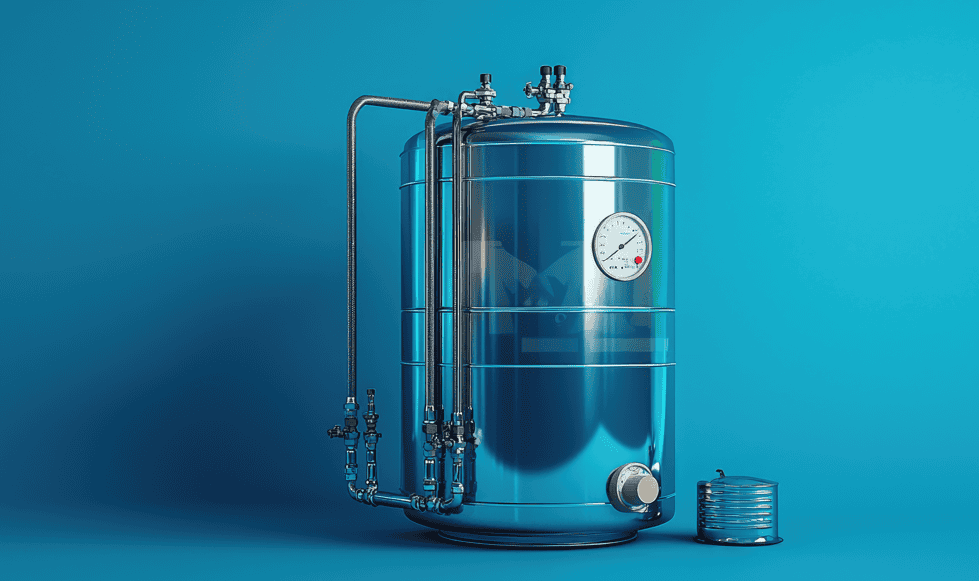
Comparing Your Options: A Practical Buyer’s Guide to Replacing a Hot Water Cylinder
If your hot water cylinder is starting to show its age — inconsistent temperatures, rust stains, a pressure relief valve that won’t stop dripping — you’re probably facing a decision you didn’t expect to make this year. The good news is that a failing cylinder is also an opportunity: rather than replacing like-for-like out of habit, it pays to spend a few minutes thinking about whether a different system might actually suit your household better. Here’s how to think through the options before you start calling around for quotes.
Table of Contents
Start With How Your Household Actually Uses Hot Water
Before comparing cylinder types, it helps to be honest about your household’s hot water habits. A couple in a two-bedroom unit has very different needs from a family of five running back-to-back showers every morning. Peak demand — several hot water draws close together — matters more than average daily usage when it comes to sizing and system choice, because a cylinder that’s technically “big enough” on paper can still run cold if too many taps open at once.
Your water pressure situation matters too. Homes with strong mains pressure throughout generally have more system options open to them, while homes on lower pressure supply, or with older low-pressure-only pipework, may be more limited unless pressure upgrades are part of the job.
The Main System Types, in Plain Terms
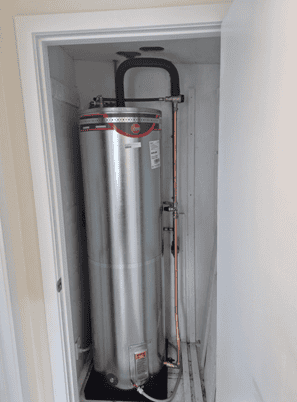
A mains-pressure cylinder installed in an outdoor position.
Electric storage cylinders are the most familiar option and remain a solid, no-fuss choice — hot water is heated and stored in a tank ready for use. They’re generally the most straightforward and affordable to install, particularly as a like-for-like replacement, though running costs depend heavily on your electricity plan and how much hot water your household uses.
Heat pump hot water systems work by extracting heat from the surrounding air rather than generating it directly, which typically makes them more efficient to run over the long term. The trade-off is a higher upfront cost and the need for outdoor space to house the unit, plus some running noise from the compressor to factor in if it’ll sit near a bedroom window or a neighbour’s fence line.
Gas systems split into two broad types: storage cylinders that heat and hold water similarly to an electric system, and continuous-flow (instantaneous) units that heat water on demand with no tank at all. Continuous-flow systems suit households that want a compact footprint and effectively unlimited hot water, but gas hot water installation is generally a more involved job than an electric swap, since it usually requires gas line work and proper flueing carried out by a registered gasfitter.
Solar hot water systems use rooftop collectors to pre-heat water, usually backed up by an electric or gas element for cloudy days or high demand. They can meaningfully cut running costs in the right conditions but come with a bigger upfront investment and roof-space and orientation requirements that not every home can accommodate.
Well-established brands sold across the New Zealand market — including Rheem, Rinnai, Thermann, Apricus, Haier, Reclaim, and EcoSpring — cover most of these categories, so brand availability generally isn’t the limiting factor; suitability for your home and budget is.
Weighing Upfront Cost Against Running Cost
This is where a lot of homeowners get tripped up: focusing only on the installation invoice while ignoring what the system will cost to run for the next ten-plus years. As a general rule, systems with a lower upfront cost — like standard electric storage cylinders — tend to have higher ongoing running costs, while systems with a higher upfront cost — heat pump and solar in particular — tend to cost less to run over time. Gas continuous-flow sits somewhere in between, with running costs tied closely to gas pricing and usage patterns rather than a tank-heating cycle.
Because energy prices and household usage patterns vary so much, it’s genuinely hard to say which option is “cheapest overall” without knowing your specific situation. Rather than relying on rough online estimates, ask a couple of installers to walk you through both the hot watercylinder installation cost and a realistic running-cost comparison for your household size and current energy tariffs — that combined picture tells you far more than either number on its own.
Don’t Forget the Less Obvious Cost Factors
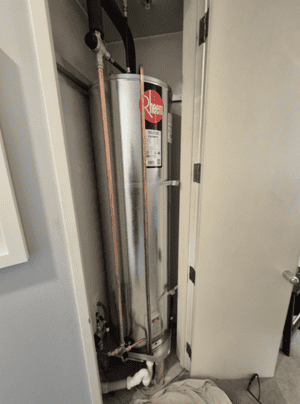
A completed indoor hot water cylinder installation.
A few things regularly catch people off guard when quotes come back higher than expected:
- Changing system type, rather than doing a like-for-like swap, usually means extra electrical, gas, or pipework changes that add to the job.
- Site access — a cylinder wedged into a tight roof cavity or an awkward cupboard takes longer to remove and install than one in open, easy-access space.
- Consents and compliance — depending on the scope of work, building consent may be required, and installation generally needs to be carried out or supervised by a licensed plumbing or gasfitting professional. Requirements differ by council and by job, so confirm specifics with your installer rather than assuming.
- Underlying issues uncovered mid-job — old pipework, undersized electrical circuits, or corrosion that wasn’t visible until the old cylinder came out.
None of these are reasons to avoid upgrading — they’re simply things worth raising upfront so the quote you receive is realistic rather than a bare-minimum figure that grows once work is underway.
A Simple Way to Compare Quotes
When quotes start coming in, resist the urge to compare on price alone. Two quotes for what looks like the same job can differ significantly if one includes a full site assessment, consent handling, and disposal of the old cylinder, while the other assumes a simple swap and leaves those items as “if required” add-ons. A helpful approach is to ask each installer for the same breakdown: cylinder type, size, and brand; whether it’s a like-for-like swap or a system change; what’s included versus what could be an additional cost; and estimated timeframe. Comparing apples with apples this way makes it much easier to see which quote actually represents the better deal.
Making the Call
There’s no single “best” hot water system for every New Zealand home — the right choice depends on household size, existing infrastructure, available space, budget, and how long you plan to stay in the property. What matters more than picking the theoretically most efficient system is getting an accurate, personalised assessment of your specific home before committing. A short site visit from a licensed professional will tell you far more about what will actually work — and what it will actually cost — than any general guide, this one included, ever can.
For more information please visit our blog.

Sudarsan Chakraborty is a professional Blogger and blog writer. He lives and breathes in the blogging industry. He regularly writes on Widetopics to keep all the readers updated with the latest facts on wide range of topics.