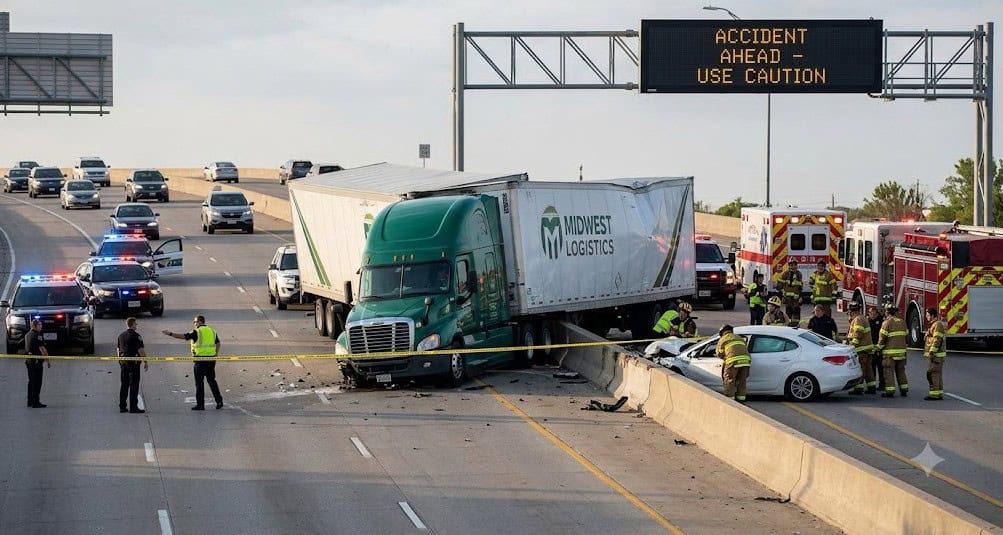
5 Crucial Steps to Take Immediately After a Commercial Truck Accident
A commercial truck crash happens faster than most people realize. And it happens over and over in the years after the wreck when victims realize they trusted the wrong person; they trusted the insurance company for the trucking company. That insurance company doesn’t even wait for the smoke to clear. Their team of claim specialists and defense lawyers rushes to the scene to start preparing their case before you even leave the hospital.
You need to be ready with your case when they’re ready with theirs. That isn’t happening overnight, but you must get started right away. How you handle the details in the critical hours and days after the crash can destroy any chance you ever had for a fair settlement. Here’s what to do immediately after the commercial truck hits your car.
Table of Contents
Get Medical Attention Immediately, Even If You Feel Fine
Adrenaline can mask pain. Injuries like whiplash or internal bleeding and soft-tissue injuries can remain asymptomatic for hours or even days after a crash. And just because you walked away from the wreck and felt a bit shaken but “fine” doesn’t mean your body is in agreement.
Visit the emergency room or stop by urgent care the day of the crash. Again, this isn’t just for health reasons, though that’s primarily why. A day-of medical record establishes a direct, time-stamped connection between the crash and your injuries. Wait a week, and the trucking company’s lawyers will be able to argue with ease that your injury derived from something other than the wreck.
Call 911 and Get an Official Police Report
Never agree to a private settlement at the scene or decline to have the police involved. The first step is to protect your rights with an official accident report. This will be used by insurers to gauge liability with the law courts doing the same if necessary.
Many don’t realize the truth, carriers typically inform their claims representative or insurance adjuster about an incident with one of their trucks right away. You might receive a call from that person in your hospital room or find them on the scene within hours of the collision. If they’re the only ones to state what happened, a police report can give you a non-biased leg to stand on.
Document The Scene Before it Disappears
Take pictures of the scene as soon as possible. Skid marks fade. Debris gets swept up. The truck gets towed and, in some cases, repaired before anyone outside the company gets a proper look at it. Whatever you can capture with your phone in the minutes after a crash may be evidence that no longer exists a day later.
Photograph the truck’s license plate and its DOT number, which identifies the carrier and matters later for tracing liability. Get pictures of vehicle damage from multiple angles, road conditions, skid marks, and any visible signs the driver was fatigued or distracted. If you can safely do so, note the driver’s license information too. This kind of on-the-ground documentation often ends up mattering more than people expect, because official investigations can take weeks to catch up to what a phone camera captured in real time.
Talk to a Truck Accident Attorney Before You Talk to any Insurer
Truck crashes are more legally and technically complex than your typical car crash. The Federal Motor Carrier Safety Administration sets limits on how long a driver can be behind the wheel with their Hours of Service regulations, and Electronic Logging Devices. The semi-truck Event Data Recorder, or “black box,” offers a snapshot of the vehicle’s speed and braking just before the collision, but that information can be lost or overwritten if the truck is repaired or recycled too early.
Then there’s the question of liability. The driver, the trucking company, a broker, a maintenance company, and/or a part manufacturer might be to blame. Figuring that out and securing the relevant evidence before it’s too late is a lot to juggle when you’re trying to heal. An experienced firm like erichenrylaw.com can secure black box data, locate all the defendants, and deal with insurance companies, so you don’t have to worry about it while you focus on recovery.
Don’t Give a Recorded Statement or Sign Anything
Being contacted by an adjuster shortly after your accident should raise your suspicions. Their role is to keep the costs down for the trucking company, and obtaining a recorded statement while you are still unaware of the full consequences of your injuries is one of the less complicated methods to achieve that. Offering a fast, conveniently “big” settlement is another way to keep your costs low. Settlements like this will definitely not take your long-term lost wages or medical costs into account.
Don’t sign any medical releases either as they can provide the insurance company with your complete medical history, not just pertinent post-crash records, and allow them to argue that your injuries are due to a preexisting condition. Finally, be very careful what you say at the scene, or to anyone else soon after. In many jurisdictions, even admitting 1% fault can lead to a reduction in the sum you are entitled to under comparative fault laws.
The Window is Smaller Than You Think
All of these details make a difference because the countdown to solidify a case begins from the second the collision occurs – not weeks or months down the line when you finally decide to seek out compensation. The longer you wait to gather medical bills, secure proof from the scene or hire an attorney, the weaker your case becomes. Trucking companies and insurance carriers invest time, money and skill to protect their interests in that urgent aftermath. Most laypeople are not even aware they are in a contest, much less waging it alone.

Sudarsan Chakraborty is a professional Blogger and blog writer. He lives and breathes in the blogging industry. He regularly writes on Widetopics to keep all the readers updated with the latest facts on wide range of topics.