From Roadside Repairs to Planned Service: The Value of Connected Truck Equipment
A liftgate failure at the last delivery stop can disrupt more than one shipment. The driver may be unable to unload, the customer may need to arrange assistance, and the vehicle’s next assignment may have to change. A relatively small equipment problem becomes an operational problem because of when and where it appears.
For truck and trailer equipment manufacturers, that is a useful starting point for connected-product development. What information could help a customer recognize a developing issue while there is still time to arrange service?
Building that capability requires a dependable way to get equipment readings into a maintenance application. Blues provides connectivity modules and a cloud platform that truck and trailer equipment manufacturers can incorporate into their products. This gives engineering teams more room to focus on equipment diagnostics and service recommendations while reducing the communications infrastructure they need to develop and maintain themselves.
The goal is practical: give maintenance teams better opportunities to investigate equipment before a problem interrupts its use.
Table of Contents
Follow One Problem From The Equipment to The Workshop
Consider a delivery vehicle whose battery-powered liftgate becomes unreliable toward the end of its route. At the depot, it may operate normally. After repeated deliveries, the driver notices slower operation or an inability to complete a lift.
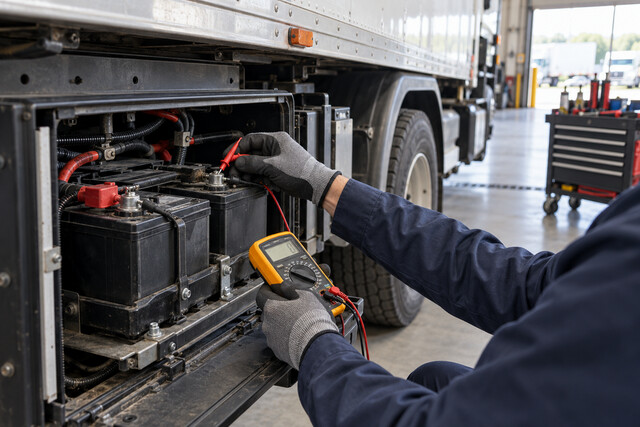
A connected monitoring product could record battery voltage alongside liftgate activity and charging information, where those signals are available. Over several trips, the record may reveal that the problem appears after repeated use with limited opportunity to recharge.
That information does not establish the cause by itself. Battery condition, charging performance, wiring, and operating demands could all require investigation. It does, however, give the maintenance team a more specific starting point than an intermittent fault reported from memory.
The fleet can arrange a check when the vehicle returns, with the relevant history available to the technician. If testing identifies a repairable issue, the work may fit into an existing maintenance window instead of becoming an urgent call from a customer’s loading area.
Useful Warnings Need a Service Decision Behind Them
A connected product can generate plenty of notifications without improving maintenance.
The manufacturer needs to establish which conditions deserve attention, how persistent they should be before an alert is raised, and what the customer should do next. An isolated reading during normal operation may mean little. A recurring pattern under comparable conditions may justify an inspection.
Those distinctions require knowledge of the equipment. Product engineers and service teams can work together to define appropriate thresholds and supporting information, then refine them using field experience.
The resulting notification should help someone make a decision. It might recommend checking a charging connection, reviewing recent operating demands, or booking an inspection. Where the evidence is insufficient, it should say what additional checks are needed.
This is also why condition monitoring can be valuable before a manufacturer develops a sophisticated predictive-maintenance model. Identifying a condition that warrants attention is useful even when the system cannot estimate exactly when a component will fail.
The Manufacturer Has a Build-versus-buy Decision
Developing the monitoring service involves more than choosing sensors.
The team needs to collect readings, transmit them securely, associate them with the correct equipment, and make them available to the application. Deployed devices also need support as installations grow and software changes.
A manufacturer can develop that infrastructure internally, but the work competes with equipment engineering and service development. For a liftgate supplier, the distinctive expertise may lie in understanding operating cycles, electrical demands, and failure patterns.
Using an established connectivity system such as Blues gives that team a foundation for moving equipment data into its preferred cloud environment. The manufacturer still defines the diagnostic logic and customer experience, while reducing the amount of communications infrastructure it needs to create itself.
That division of work can make a focused monitoring service more achievable.
Measure The Maintenance Outcome
Once deployed, the product should be evaluated against the service problem it was intended to address.
Did alerts lead to confirmed findings? Were inspections scheduled earlier? Did technicians receive enough information to investigate efficiently? How often did notifications create unnecessary work?
Those questions help manufacturers improve both the product and its recommendations. They also give fleet customers a clearer way to judge its value than counting sensor readings or dashboard visits.
Some equipment will still fail unexpectedly, and physical inspections remain essential. Connected monitoring adds another source of evidence to maintenance planning. When it works well, an issue that might have surfaced at the final delivery stop is investigated at the depot, with the right people and tools already available.
For more information, visit our blog.

Sudarsan Chakraborty is a professional Blogger and blog writer. He lives and breathes in the blogging industry. He regularly writes on Widetopics to keep all the readers updated with the latest facts on wide range of topics.