How to Match Boat Seats to Different Boating Styles?
The same boat seat that serves your needs when you spend an entire day fishing may cause you problems if you are skiing, or simply cruising the coastline. Boating styles impose different demands upon seating, and thus a mis-match of the wrong type of seating may result in either discomfort, or safety issues.
Recognize what each style of boating requires of the seat(s), to avoid purchasing based solely on aesthetics, or merely on a “what fits” basis.
Table of Contents
Fishing
In most cases, fishing involves long periods of sitting in a fixed position, whether it is watching lines or bait. Therefore, comfort over extended time frames is more important than anything else.
Choose seats that have sufficient lower back support, and enough cushioning to endure hours of sitting without numbness. A swivel base is nearly a necessity for fishing due to the fact that anglers must continually rotate to a variety of sides of the boat without repeatedly standing up.
Seat height is also a consideration. Higher seats provide greater visibility to spot fish or watch multiple lines, however, they increase the center of gravity which negatively affects stability in rougher waters. Adjustable pedestals allow for the ability to adjust the height of the seat to meet conditions and the requirements of the fishing situation.
If you operate a serious fishing vessel (i.e., charter boats or commercial vessels) look for boat seats for sale that incorporate storage compartments beneath the seat, or built-in rod holders. This allows you to store items that you frequently use, while minimizing clutter on the deck.
Cruising/Leisure Use
Cruising is focused on providing comfort and socialization opportunities rather than the active boat handling required of fishing or offshore boating. In this case, the seats become more like outdoor furniture than functional boat equipment.
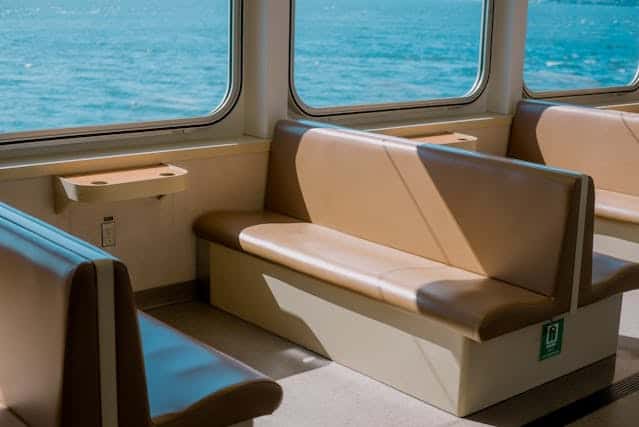
Bench-style seating is ideal for cruisers because it accommodates multiple passengers and creates a social environment. While comfort and back support are important for cruiser seats, they do not need to be as heavily suspended as fishing or offshore seats.
Additionally, folding or convertible seats that create lounging areas add versatility. Some cruiser seats convert to sun pads or recline for relaxation on calm days. These types of features are unimportant for active boating but greatly enhance the floating living room experience that recreational cruising offers.
Soft, aesthetically pleasing materials that are durable enough for everyday use are preferred for cruiser boats since they are not subject to the same degree of abuse that fishing or work boats are.
Watersports/Towing
Watersports impose entirely new demands on seating. To maintain control of the boat, the operator must be able to see behind him/her to monitor the skier/tuber(s), while in most cases, operating the boat in choppy water created by the boat’s own wake.
Bolster seats (those with raised sides that operators can lean against while standing) are ideal for watersport use. Bolster seats provide support when standing for improved visibility and control, and also allow the operator to sit during transit or breaks.
The bolster must be firm enough to provide effective support when leaning against it. Soft, plush bolsters that collapse under the pressure of the operator’s body do not provide meaningful support for active boat handling. Look for bolsters with rigid backing, and sufficient height to support the operator’s body at hip level.
Seats that can be easily removed or adjusted to accommodate changing circumstances are beneficial to watersports boats. Additionally, seats with quick release mounts or flip-up seats provide valuable deck space when necessary to load swimmers or manage equipment. Watersports boats that can utilize seats that can be easily positioned or removed based on the specific water sport being conducted will likely be a better investment.
Offshore/Rough Water Operations
Offshore boating and operating in rough waters imposes serious demands on the seating system. The seating system must serve as a safety device as well as a comfort device.
Mechanical or pneumatic suspension is necessary to safely absorb the impact of waves and prevent the repetitive shocks that lead to back injuries and fatigue. Suspension systems must be capable of absorbing the shock of serious impacts.
High bolsters and sturdy mounting are also important for safety. When impacting large waves at high speeds, the operator needs to be securely fastened into the seat, not bouncing around the cockpit.
Some offshore seats have harness attachment points to further stabilize the operator in extreme conditions. Regardless of the severity of the conditions, the operator must be able to view the horizon and access all boat controls from the seated position. Many offshore seats are designed to be adjustable or hybrid and provide comfort for both the seated and standing positions.
If you are planning to purchase a seat for offshore use, prioritize the suspension quality and mounting strength over all other considerations, including aesthetic appeal and any additional features.
Commercial & Work Vessels
Commercial vessels (charter fishing, ferry service, harbor maintenance, etc.) require seats that provide comfort for long shifts and durability to withstand continuous use. Durability becomes the number one priority for commercial vessels since the seats are utilized continuously.
Heavy-duty construction using marine grade materials are essential for commercial vessels. The upholstered components of the seats must be able to withstand prolonged exposure to sunlight, moisture, and continued use without degrading. All metal components must be resistant to corrosion due to salt spray.
While comfort is still important, it is the operational function of the seat that is paramount. Commercial vessel operators require seats that will support them for long hours (often 8 hours) without resulting in fatigue or pain. Supportive lumbar and adequate cushioning are critical factors in determining which seats will perform well in commercial applications.
Additionally, commercial vessels may employ multiple operators who require different seating configurations. Seats that are designed to be easily adjustable (even with gloved hands) will enable operators to quickly adapt the seat to fit their individual needs.
Center Console Considerations
Center console boats pose unique seating challenges due to limited space and the presence of the console which restricts certain seating arrangements. Leaning posts are more suitable for many center console applications than traditional seats.
A quality leaning post provides support for standing while allowing a small seat to be used when conditions permit sitting. Storing rods or other gear in the area immediately below the leaning post maximizes the already limited space on a center console boat.
Seating or leaning posts that provide reasonable comfort and performance for fishing, cruising, and operating in rough waters provide a better value than specialized seating options designed for only one application.
Environmental/Maintenance Considerations
Boat seats in marine environments are exposed to a wide range of environmental elements that rapidly degrade the material. Exposure to sunlight, salt spray, moisture, and continuous vibration all contribute to the degradation of the seat material. Using marine-grade vinyl or specialized fabrics in the seat construction will extend the life of the seat material compared to automotive-grade materials that rapidly degrade when exposed to UV and salt.
Lighter colored seats are easier to clean and appear less dirty than darker colored seats; however, they are generally hotter in direct sunlight. Conversely, dark colored seats will conceal stains better, but may become unbearably hot in direct sunlight. Consider the trade-off based on your typical usage and climate.
Regardless of the quality of the seat material, regular cleaning and treatment will extend its life. Salt buildup contributes to rapid deterioration; therefore, washing your seats with fresh water after each saltwater excursion will help to minimize deterioration. Applying UV protectants will also help, but nothing will stop the effects of prolonged exposure to sunlight.
Choosing the Correct Seat
Identify the actual boating style in which your boat will be used, rather than how you plan to use it. Boats purchased for fishing are often used for more cruising, and vice versa. Purchase seats that will serve you well in the primary use of the boat, but can also handle the secondary uses.
Consider the boat’s size and configuration. Smaller boats require seats that consume minimal space and add little weight. Larger vessels can accommodate larger, more feature-rich seats without affecting performance.
Finally, budget is always a factor, but the cost of cheap seats in a harsh marine environment will be reflected in the frequency of replacement. Quality seats will cost more upfront, but will remain comfortable and functional for a longer period of time.

Biswajit Rakshit is a professional blogger and writer. He loves to write on various topics.